
Do Paintings Last? On Preservation and Care in Watercolor
A common question I hear from collectors is whether original watercolor paintings last. The worry is understandable - watercolor is painted on paper, and paper can feel more delicate in comparison to canvas etc. The good news is that high-quality watercolor paintings, when made with the right materials and properly cared for, are remarkably durable and can last for generations - often centuries.
The paper I use:
All of my watercolors are painted on 300 gsm, 100% cotton paper. This is the professional standard for archival watercolor work.
- 300 gsm (grams per square meter, this is how we describe the thickness of the paper) gives the sheet substantial weight and stiffness. It resists buckling when wet and holds up well under handling and framing.
- 100% cotton paper is acid-free and lignin-free. Unlike wood-pulp papers that can yellow and become brittle over time, pure cotton paper remains stable for decades and beyond when kept under proper conditions. Museums and conservation professionals regard cotton rag papers as archival.
This combination—heavyweight, pure cotton—means the support itself is built for longevity, not just temporary display.
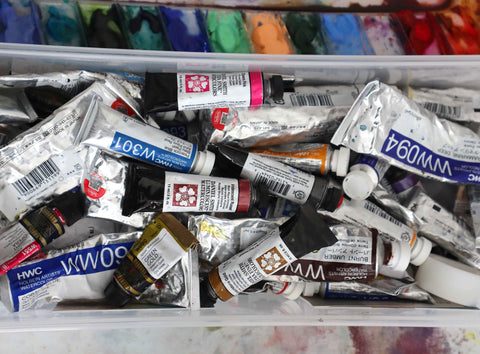
The paints I use:
I use watercolor paints from Holbein, Daniel Smith, and Mission. These paints are professional, artist-grade watercolors, their quality differs from student-grade paints in two critical ways that directly affect how long a painting lasts:
- Higher pigment load and purity. More pure pigment and fewer fillers mean richer color that is less likely to fade or shift.
- Lightfastness ratings. Reputable artist-grade brands test and rate their colors for resistance to fading under light exposure.
Together, archival paper and lightfast, artist-grade pigments form a stable foundation. The painting is not inherently fragile simply because it is watercolor on paper.
Paintings should always be framed:
Watercolor paintings should always be framed behind glass or plexiglass (acrylic glazing). Framing does three important things:
- It protects the paper surface from dust, dirt, fingerprints, and accidental contact.
- It creates a physical barrier against humidity fluctuations and airborne pollutants.
- It keeps the work secure and stable for hanging and display.
Most of my paintings are sold unframed, as it is the safest way to protect the painting and keep it secure for international shipping. I strongly recommend framing the painting once you receive it. At the framers, you will be able to choose traditional glass or modern plexiglass, either way, the protective layer is non-negotiable for long-term preservation.

Storage and Display Best Practices
Good care applies to all paintings—watercolor, oil, acrylic, or otherwise—but it is especially important for works on paper:
- Keep paintings in a cool, dry place. Avoid bathrooms, kitchens or any location with high humidity or temperature swings.
- Never hang or store a painting in direct sunlight. Prolonged exposure to strong light is the primary cause of fading in any medium.
- For extra protection, you can consider UV-filtering glass on your framing. These specially treated materials block a significant portion of ultraviolet light, further reducing the risk of fading over decades of display.
I hope this helps provide some clarity on how to care for watercolor paintings. You’re welcome to email me if you have any further questions about the painting materials I use, etc.